Journal
To Perch or Not To Perch
After learning about the VIP morning at Rye Meads from my previous visit, I returned early for a session from 7am until 9am. Armed with a flask of coffee, the five of us settled into the hide and spent the morning observing and photographing kingfishers.
Featured image
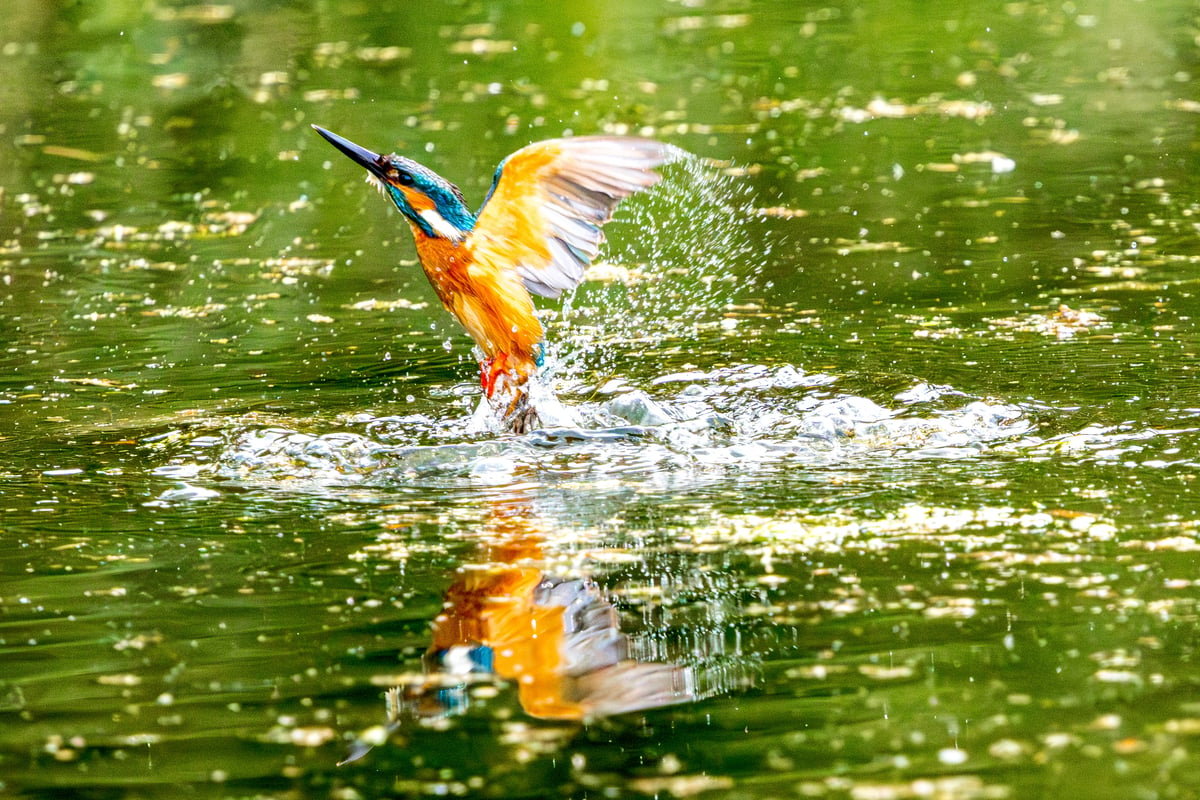
A kingfisher powers away from the water moments after completing a dive at the Kingfisher Viewing Hub at Rye Meads RSPB. With one wing fully raised and water droplets still trailing behind, the image captures the transition between hunting beneath the surface and accelerating back into flight. Although kingfishers are often photographed perched, moments like this reveal the speed and athleticism that make them such challenging subjects to follow through a viewfinder.
Kingfishers: resisting perch shots
My goal for the morning was to get great in-flight shots as well as diving and exit shots. Having learned from my previous visit, I knew that I had to spend some time understanding the flight paths and timing. Luckily the flight path had not changed from the week before and I was able to attempt plenty of flight and diving photographs. Ultimately I was occupied and focused enough to resist taking too many perched shots.
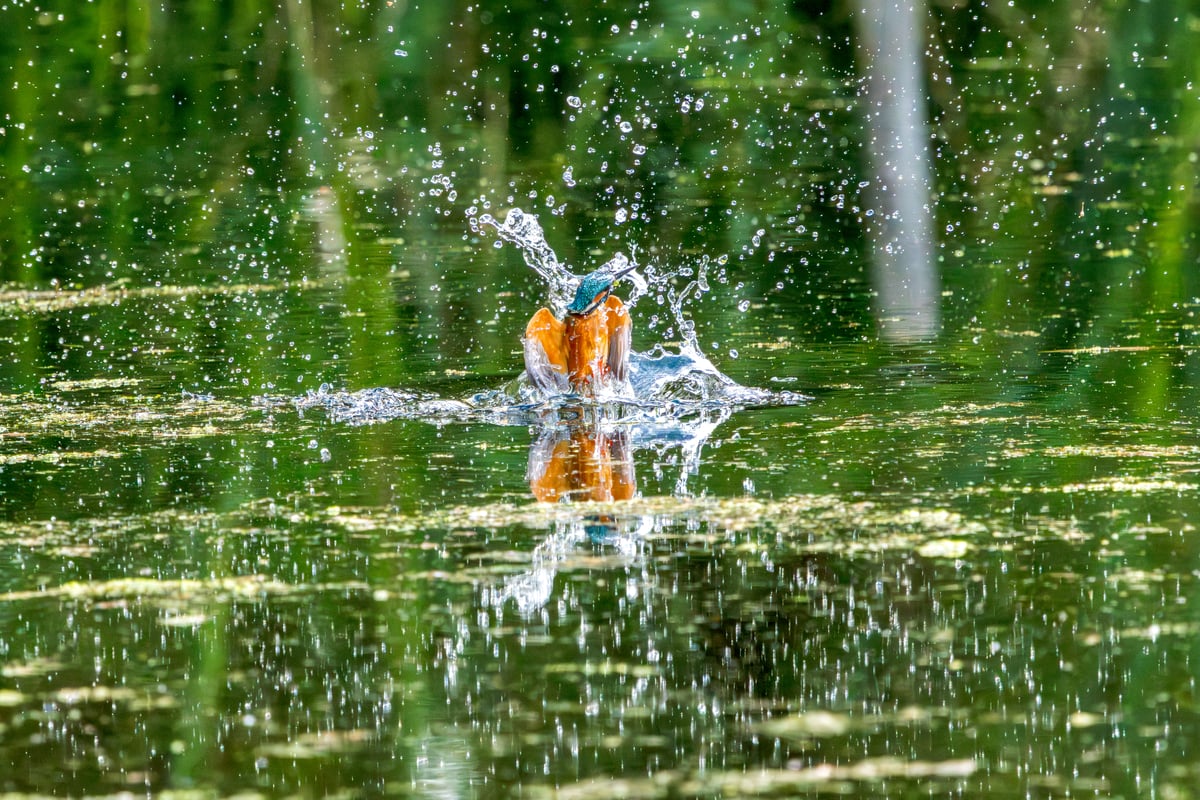
A kingfisher erupts from the water in a shower of droplets at the Kingfisher Viewing Hub at Rye Meads RSPB. Fast exits from dives are among the most challenging moments to photograph, often lasting only a fraction of a second before the bird accelerates away. Captured during a VIP morning session, this image reflects both the speed of the species and the persistence often required to anticipate the moment correctly.
Patience and learning paid off
In the days between my initial visit and the return trip, I spent a lot of time reading about kingfisher behaviour. When do they perch to rest and check that the environment is safe? When do they tend to dive to bathe? How often do they visit the nest and how long do they stay there? The answer to that last question, by the way, is not very long.
It is not just about technique, it is also about understanding the animal.
Equipped with a little more knowledge and a lot of patience, I was able to capture some of the photographs I had hoped for. Going through them at home afterwards was every bit as enjoyable as taking them.
Without the research and a better understanding of their behaviour, I do not think I would have had as much fun or achieved a half-decent keeper rate. It reinforced something that is easy to forget: time spent learning about the animal is rarely wasted.
So close
I was delighted with some of the sequence shots I was able to take. However, I have still not achieved my ultimate goal: capturing the entry, dive and exit in a single uninterrupted sequence.
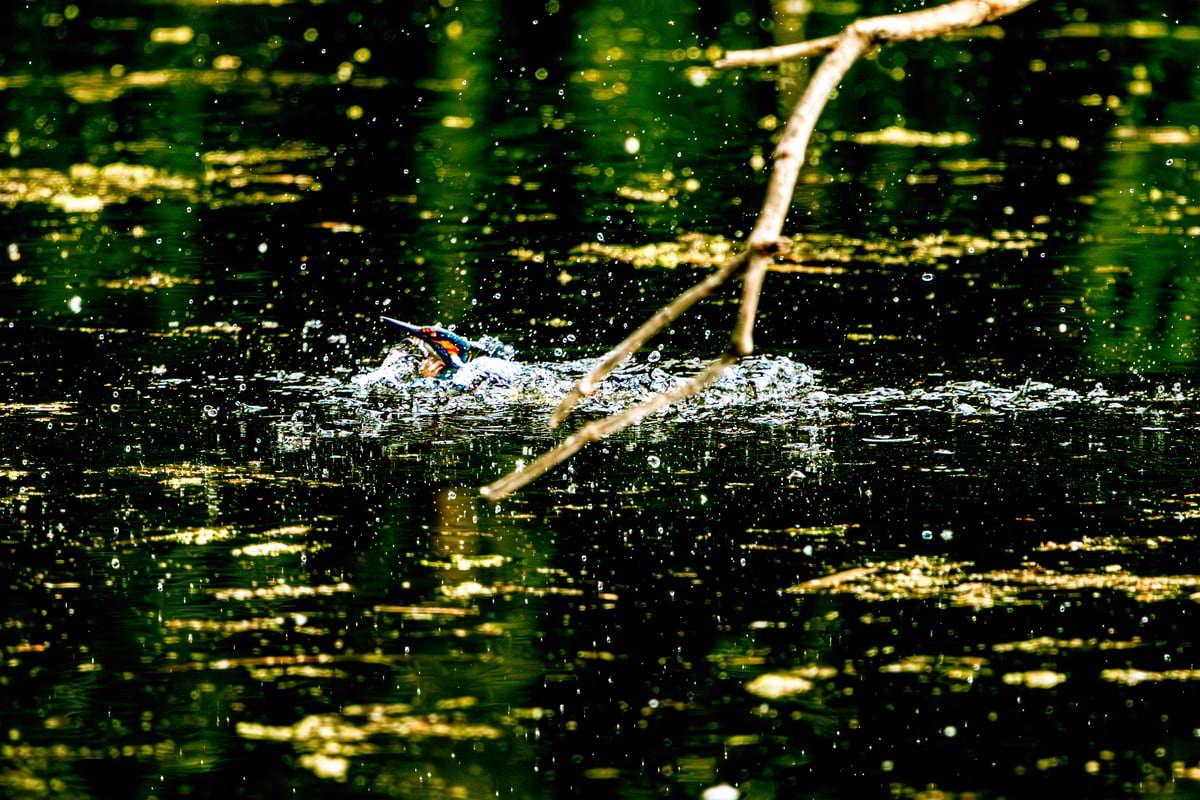
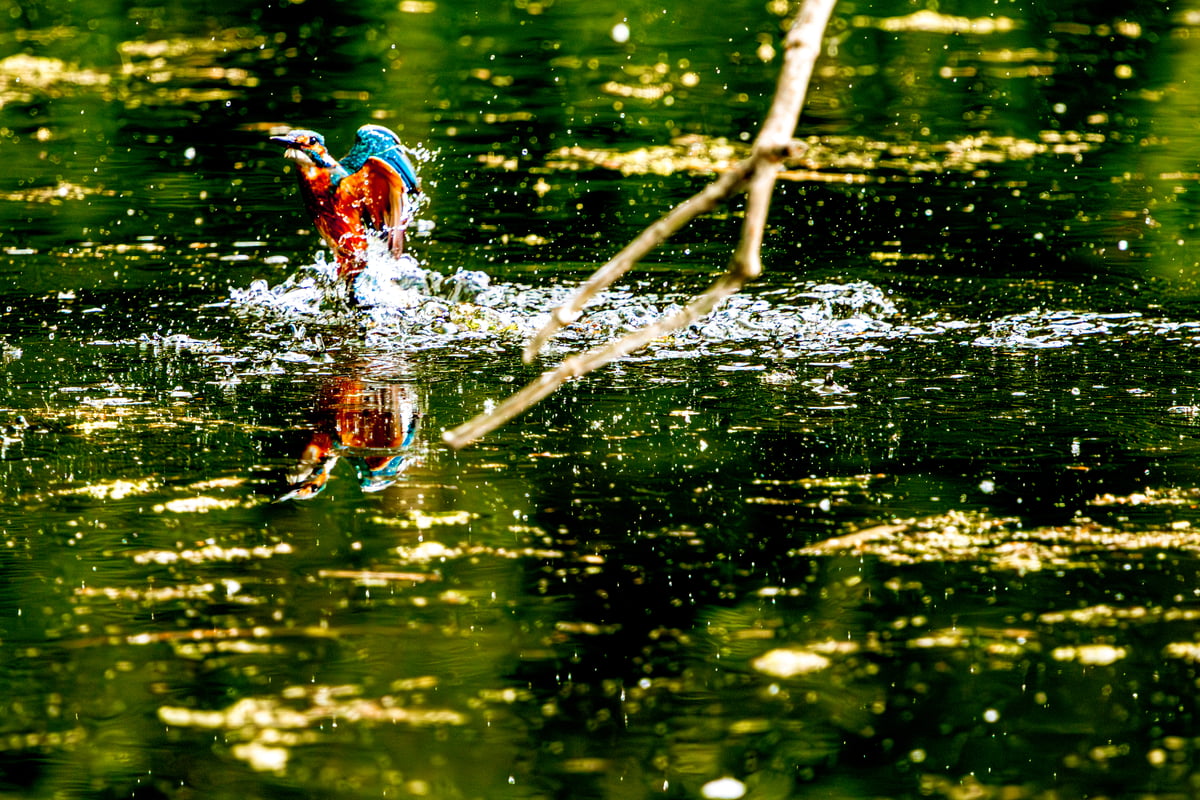
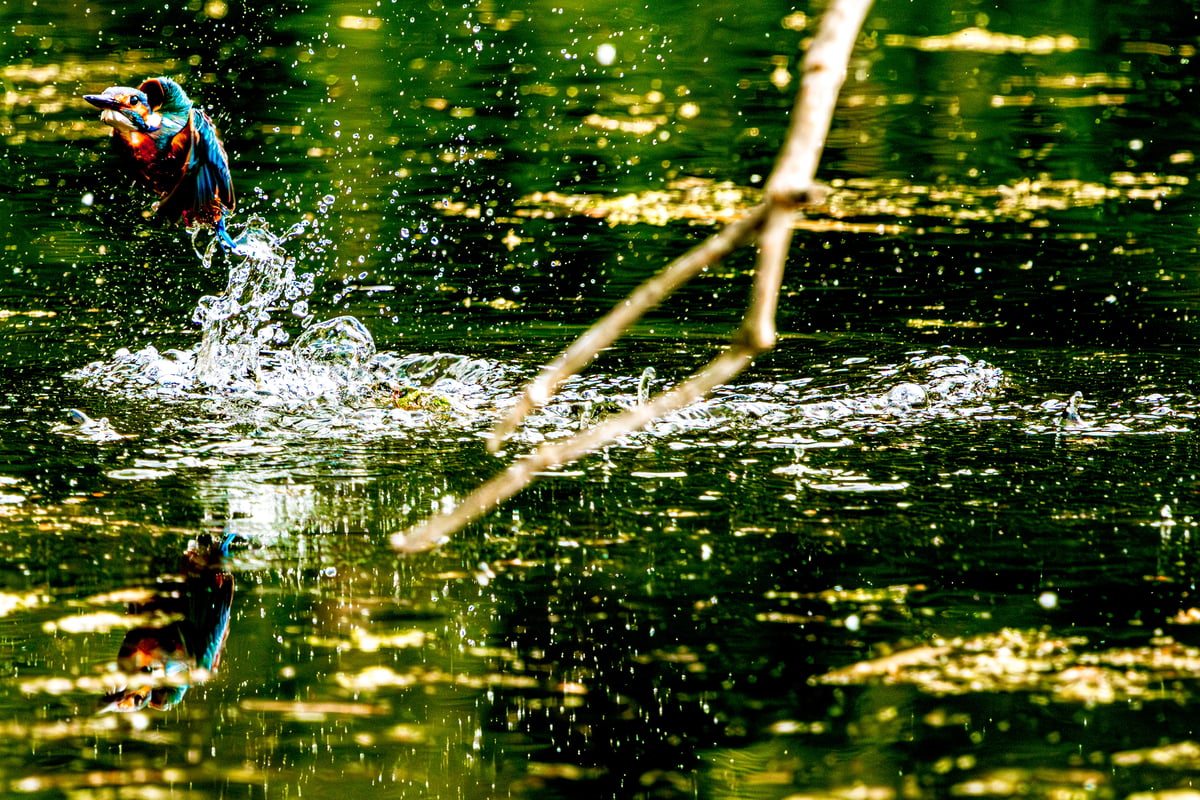
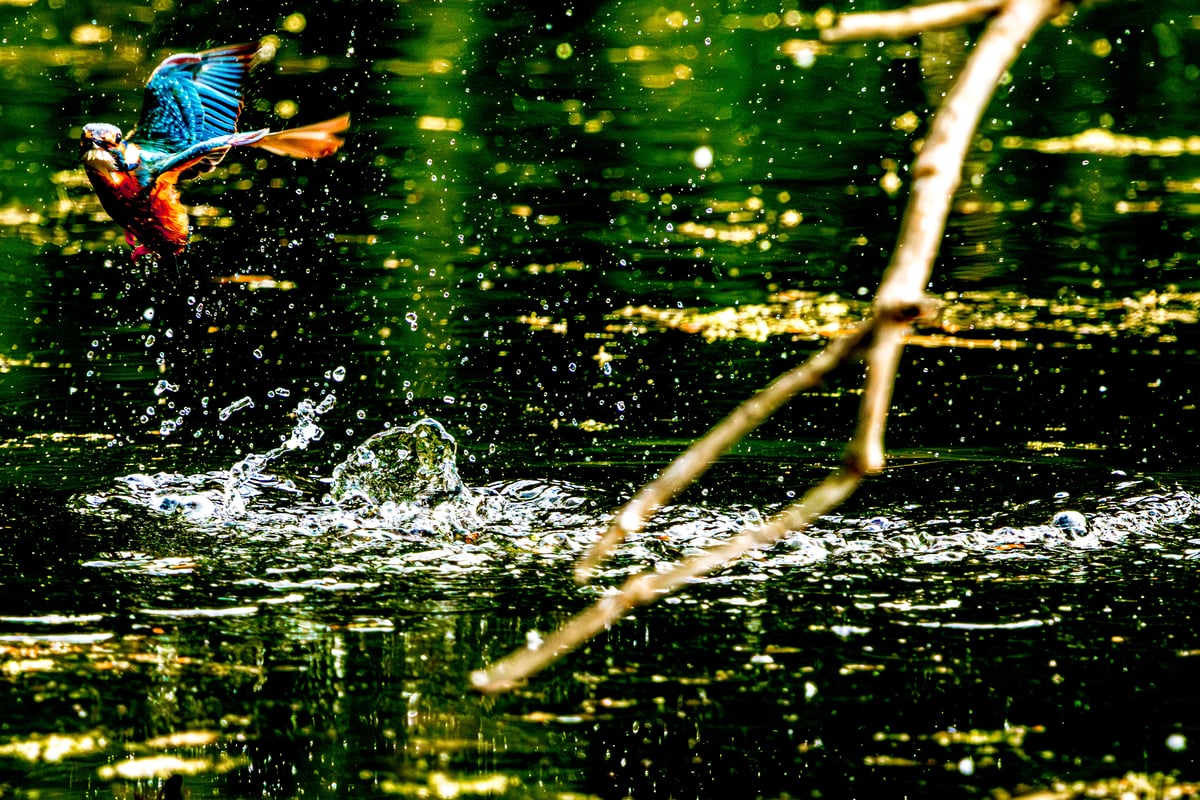
I did manage to capture some entry photographs, as well as a sequence showing a kingfisher emerging from the water. Frame by frame you can see the head appear, followed by the body and finally the rapid departure. The last frame is perhaps my favourite, showing the bird twisting through the air as it changes direction almost instantly.
Looking back at these photographs truly makes me realise just how extraordinary kingfishers are. Their dives are impressive enough, but their ability to recover, accelerate and manoeuvre immediately afterwards is arguably even more remarkable.
There is always next year
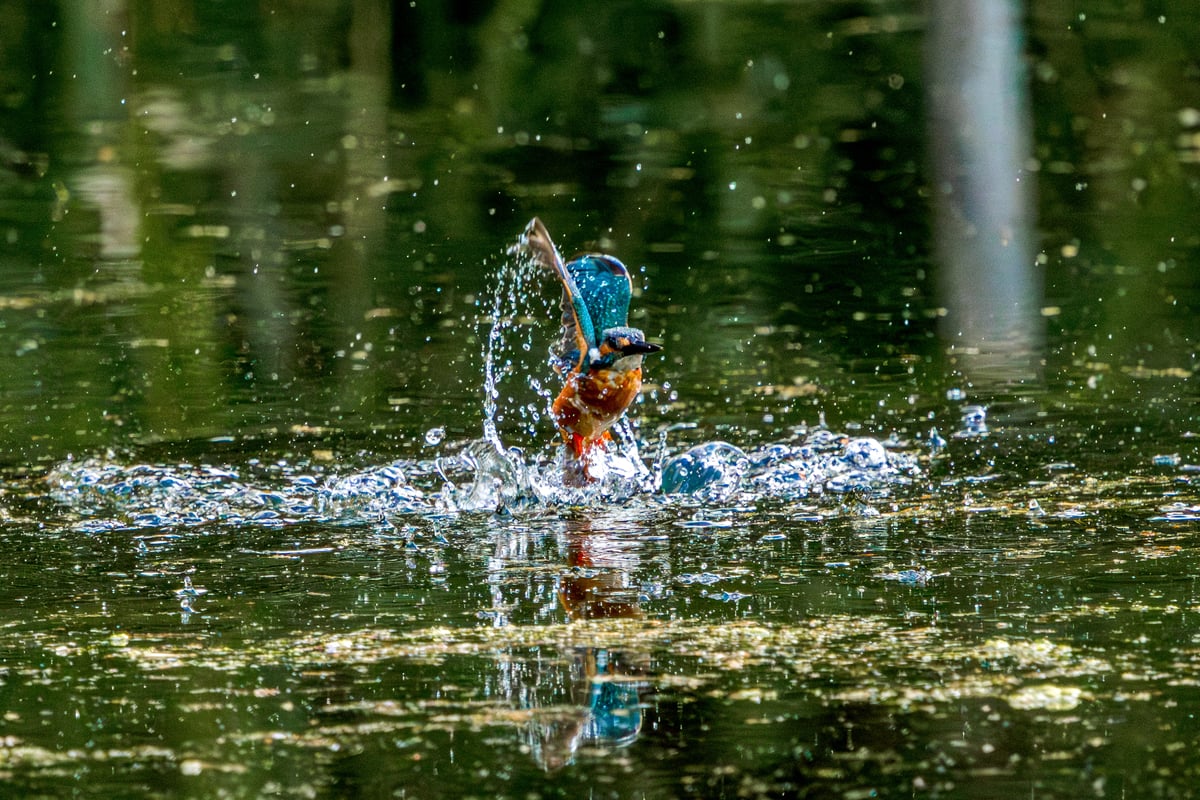
A kingfisher rises from the surface of the water moments after a dive at the Kingfisher Viewing Hub at Rye Meads RSPB. The surrounding splash and bubbles reveal just how much disturbance is created by a bird that weighs little more than a few dozen grams. Photographs like this help illustrate the brief transition between underwater hunting and the rapid acceleration that follows as the kingfisher leaves the water behind.
While I have not achieved all of my goals this spring, I am already looking forward to next year when I can have another attempt at a complete sequence. Hopefully the summer, autumn and winter will provide more opportunities to learn and improve.
I will keep on learning, trying and working on both my technique and my understanding of the species. With a bit of luck and a lot of patience, perhaps next spring will be the year I finally capture the full sequence I have been chasing.