Journal
Rewards and Frustrations of Kingfishers
A quiet Sunday morning at Rye Meads RSPB unexpectedly became a lesson in photographing one of Britain's fastest and most unpredictable birds. From perched portraits to chaotic plunge attempts under grey skies, photographing kingfishers quickly became an exercise in patience, persistence and accepting imperfection.
Featured image
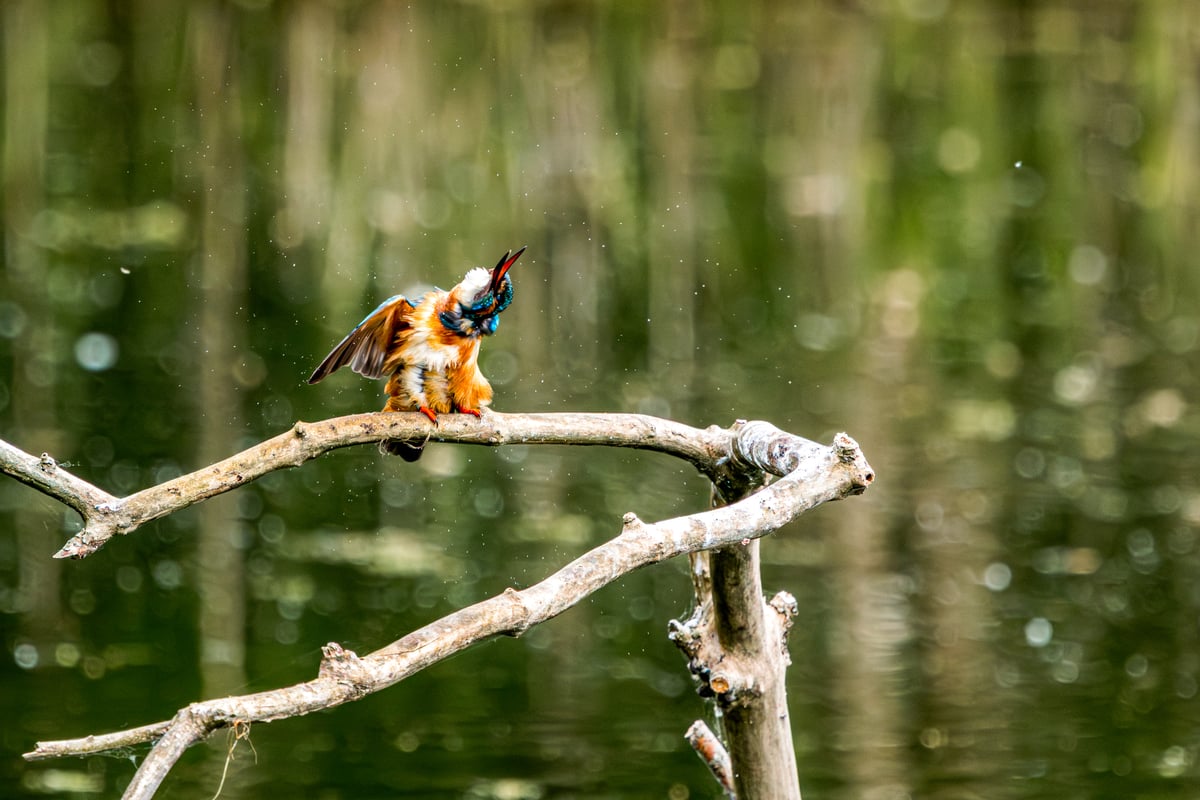
A kingfisher shakes water from its feathers moments after surfacing at Rye Meads RSPB. Brief behavioural moments like this often last only fractions of a second, making timing and autofocus tracking particularly challenging in low British spring light.
Patience
While it was overcast, it was at least a dry Sunday morning and I decided to head to Rye Meads RSPB reserve. What I did not realise was that kingfisher season was in full swing, and I quickly realised I was in for a very different morning than expected.
I have wanted to get better photographs of kingfishers for a long time. I had photographed them before, but mostly perched shots — the sort of images many wildlife photographers naturally start with. While there is absolutely skill in creating beautiful perched portraits, I found myself increasingly drawn towards behaviour and movement instead.
Since then, kingfishers have remained slightly elusive to me. I have seen them in all sorts of strange places — in theme parks such as the Efteling, deep within dark woodland with no water nearby, and once one nearly flew directly into me. But I never really had the time, opportunity or location to properly observe and photograph them.
Arriving at Rye Meads and chatting to the brilliant volunteers there, I was told two things: firstly, it had been fairly quiet and secondly, the kingfishers were actively feeding. Quiet hides often suggest little is happening, but sometimes patience pays off.
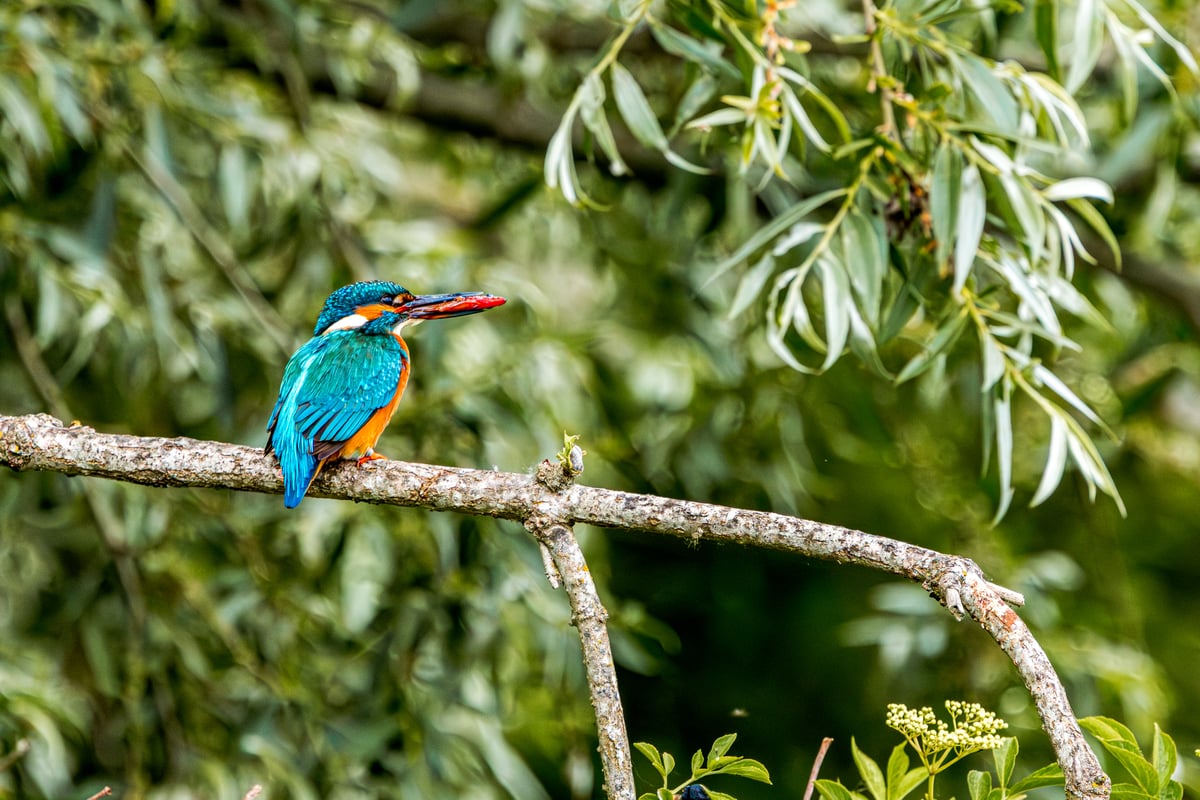
A kingfisher pauses briefly with its catch along the waterways of Rye Meads RSPB. Even seemingly simple kingfisher photographs often involve dark conditions, high ISO values, and split-second opportunities as the bird moves rapidly between perches and dives.
Learning
Sitting in the hide, I did not initially expect much activity. The reserve was calm, the hide itself was quiet and those are usually signs that little is happening.
But I persevered.
Over the next 90 minutes or so, the little electric bird kept repeating its routine. It would fly to its preferred hunting spot, return to the post, disappear into the nest to deliver food, stop for a bath, perch briefly and then repeat the entire process again.
As the morning progressed, we slowly started learning its patterns. We began anticipating the flight lanes, recognising where it preferred to stay low over the water and identifying where it tended to dive for bathing. Occasionally it even surprised us by perching much closer to the hide rather than on the expected post.
It was through these repeated observations that I started understanding the bird better. My focus slowly shifted away from simple perched portraits and towards more dynamic behavioural moments instead.
But oh boy, those are not easy.
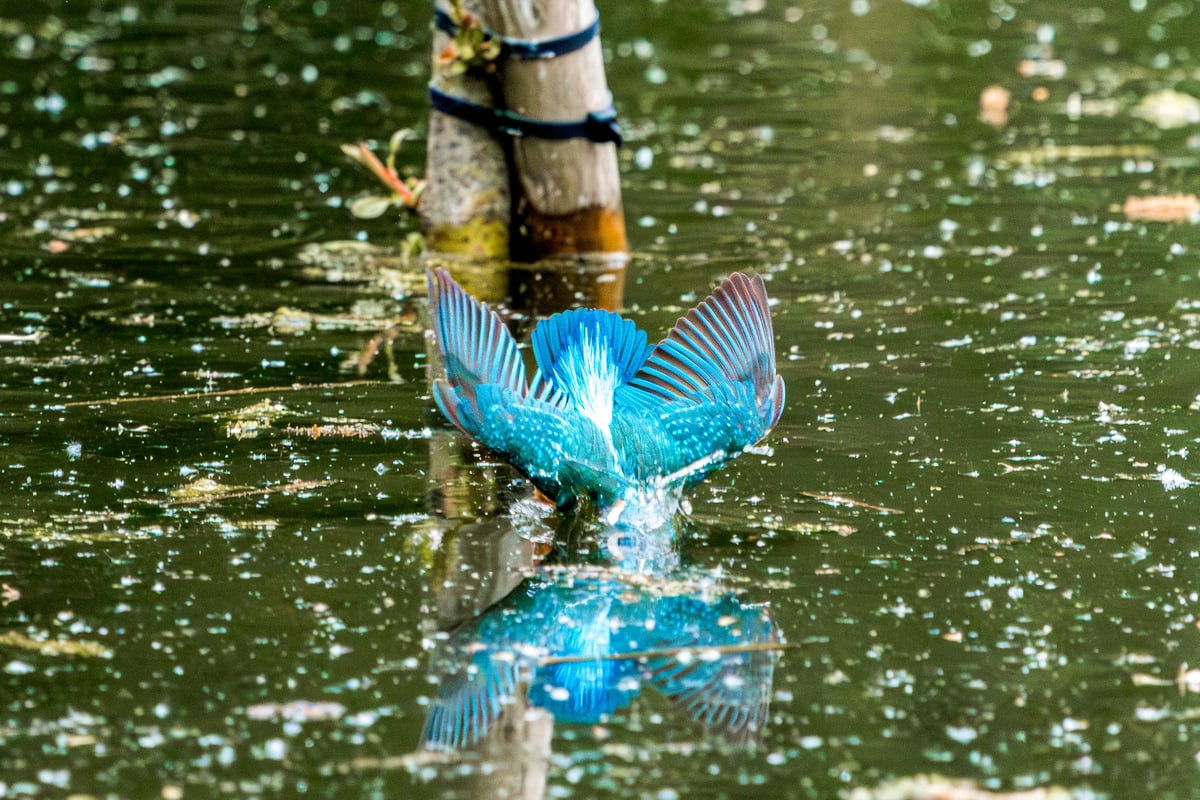
A kingfisher commits to a rapid dive at Rye Meads RSPB. Entry and exit moments happen incredibly quickly, often pushing autofocus systems, reaction times, and ISO limits to their edge under overcast British conditions.
Persistence
Wildlife photography often looks calm and controlled from the outside. In reality, moments like these are usually built from compromise, prediction, reaction speed and a bit of luck.
It is fair to say that bringing dynamism into your photography while trying to photograph kingfishers is not the easiest combination.
- The bird is small
- It flies incredibly fast
- Its movement is erratic
- Water is surprisingly difficult to photograph cleanly
- British light conditions are often far from ideal
Thankfully, modern cameras and software help us push these limitations further than before. High-speed burst modes, fast autofocus systems and modern noise reduction tools mean that even difficult conditions are now more manageable than they once were.
Many of these photographs were taken at very high ISO values — some reaching ISO 12,800 — and while that is certainly not ideal, the alternative would simply have been not taking the photograph at all. Personally, I would rather capture the moment imperfectly than miss it entirely.
Modern software such as Lightroom has become remarkably capable at handling noise in challenging situations, and in my opinion it opens creative opportunities that would previously have been much harder under poor British skies.
While these photographs are far from perfect, they give me hope. They feel like the beginning of understanding the bird better and building the foundations needed for stronger photographs in the future.
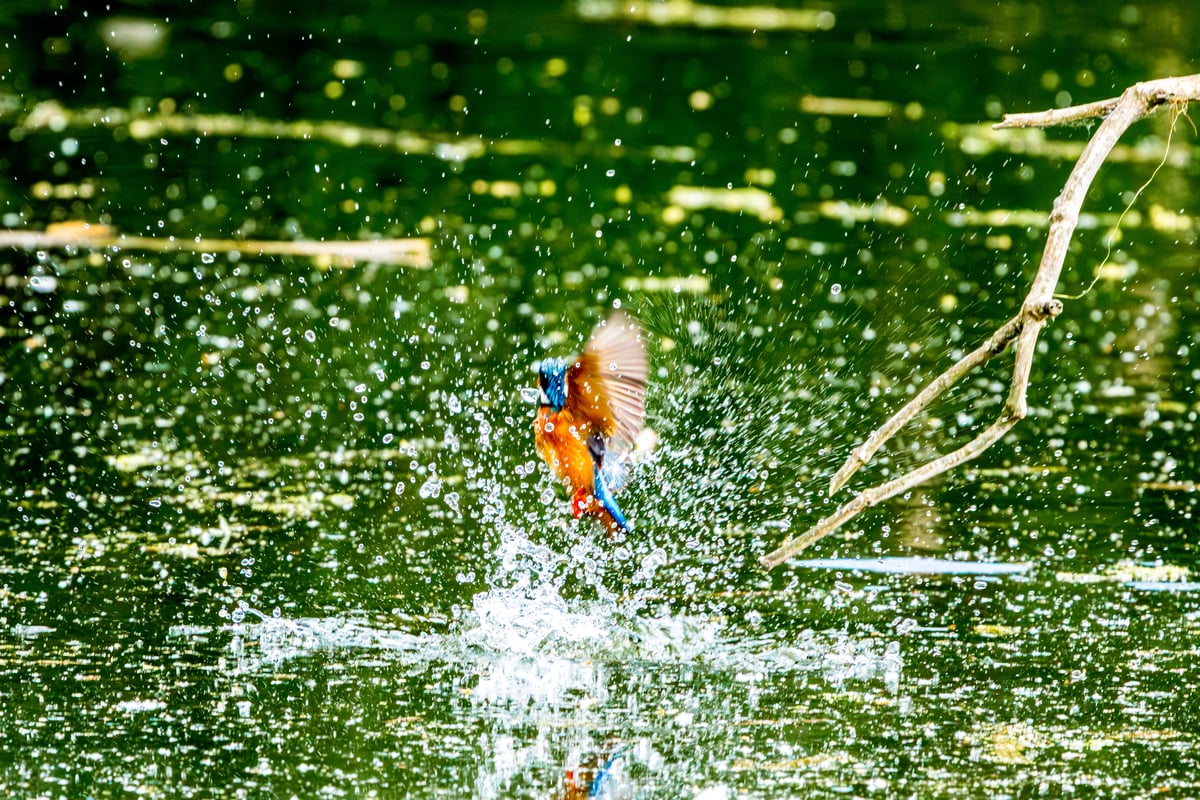
A kingfisher bursts from the water in an explosion of spray at Rye Meads RSPB. Fast exits from dives are notoriously difficult to capture cleanly, especially under darker British skies where balancing shutter speed and ISO quickly becomes a compromise.
My Aim for Next Time
With time comes experience, and experience helps us better understand the animals we want to photograph. Fortunately, Rye Meads also offered VIP kingfisher mornings — one of which I later attended — and this first visit gave me a much clearer idea of what I wanted to improve.
What I really want now are cleaner plunge and exit photographs. Images similar to the ones above, but with stronger timing, cleaner focus and slightly less chaos. The fact that I was able to capture these moments at all gives me genuine hope that, with more time and persistence, better photographs will follow.
Ultimately, this is what wildlife photography is really about for me: continuing to observe, learn and grow alongside the animals around us. Especially when technical and environmental limitations are working against us, persistence and experience become just as important as the camera itself.