Field Notes
Looks can be deceiving
I like to think I recognise a fair number of birds, even outside the UK. Every now and then, though, something appears that doesn’t quite fit expectations. This was one of those moments.
Featured image
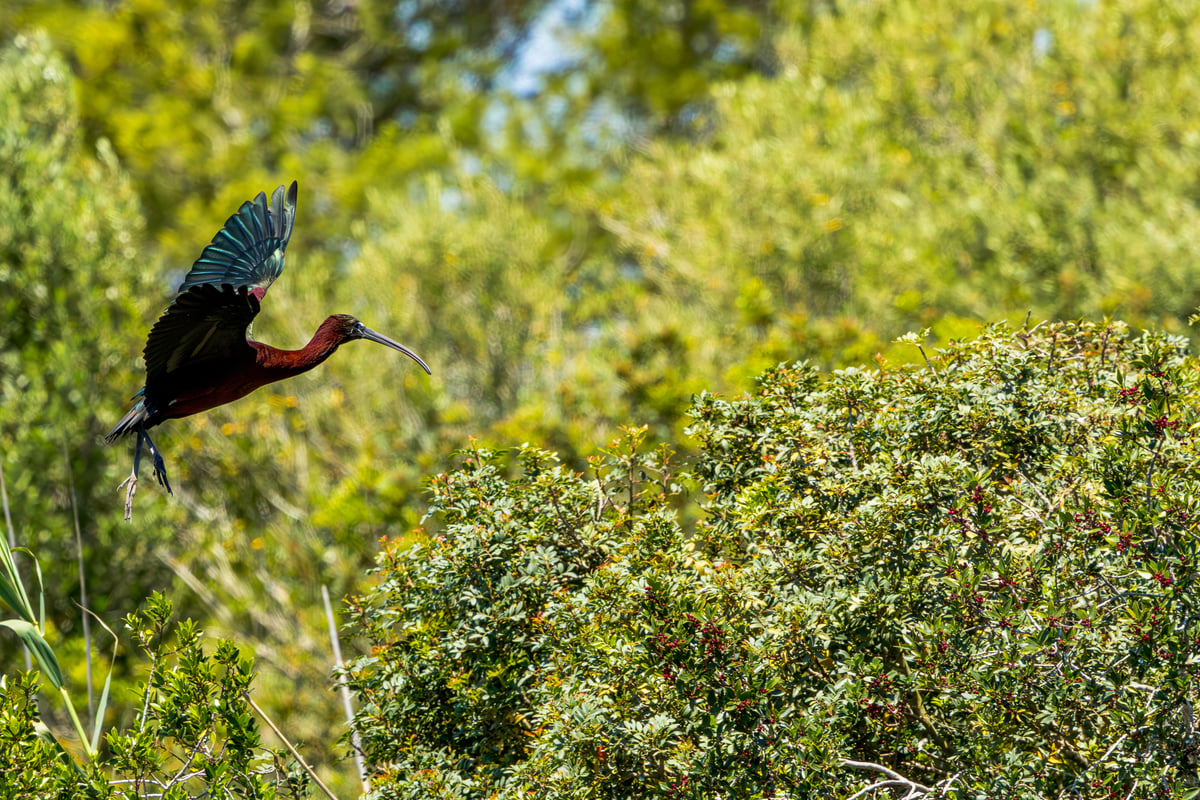
This Glossy Ibis (Plegadis falcinellus) dropped in low over the scrub before disappearing into the vegetation. For a moment the light caught the wings just enough to show the deep bronze body and the green sheen through the feathers, which is exactly what makes these birds so striking in the field.
Clumsy or majestic?
I had never seen one of these birds before. The curved beak immediately pointed towards the ibis family, but everything else felt unfamiliar — the deep maroon tones, the sheen on the wings, and the overall shape in flight.
Watching it move didn’t make things any clearer. There is something slightly awkward about the way it flies and lands, especially compared to the clean lines of a heron or stork. And yet, when the light catches the wings just right, it suddenly feels elegant.
Behold the ibis, whose curved beak mirrors the crescent moon and traces the lines of quiet understanding.
Even now, I’m not entirely sure where I land on it. Clumsy at times, but undeniably striking. As this one dropped back into the vegetation to rejoin the others, I found myself leaning slightly more towards majestic.
New encounters
Moments like this are a big part of why I enjoy being out with the camera. Not just for the photographs, but for the process of noticing something unfamiliar and working out what it is.
It doesn’t need to be rare or exceptional. Sometimes it’s simply the excitement of recognising something new, checking it properly later, and adding it to that growing mental catalogue. Even if that involves using Merlin on the back of the camera over a quiet coffee.